Floatation what?
You may have first heard about float tanks from Stranger Things, but they've been around since the 1950s, and the benefits are deeper, weirder, and more useful than the show suggested.

"Floatation what?" is the question we get most. People hear about it at a party, watch a one-minute Eleven scene on streaming, and arrive at our door with a head full of question marks. So, quickly, let's clear the fog.
The very short version
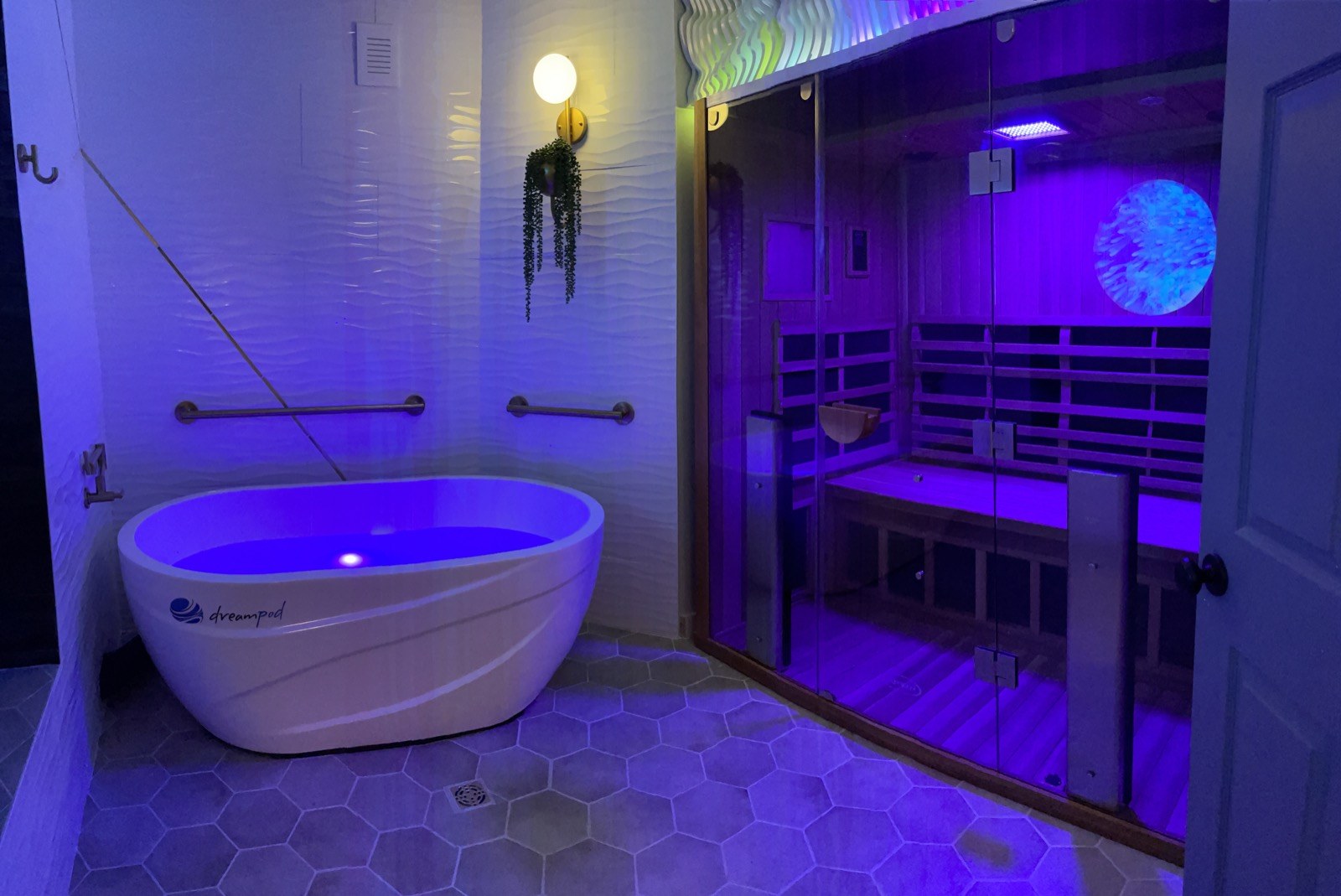
A float tank is a quiet, lightless pool containing about ten inches of skin-temperature water and roughly a thousand pounds of pharmaceutical-grade Epsom salt. The salt makes the water dense enough that you float on the surface effortlessly, like a cork. With the lid closed and the lights out, the body stops working against gravity, the skin loses track of where the water ends, and the nervous system, finally, gets a minute alone.
It is not new
The first float tank was built in 1954 by neurophysiologist Dr. John C. Lilly at the National Institute of Mental Health. He wanted to study what the brain does when it has nothing to do. The early tanks looked closer to scuba gear; over the next four decades the design evolved into something a normal person would actually want to step into.
By the 1970s and 80s, "REST", Restricted Environmental Stimulation Therapy, was being studied seriously as a treatment for chronic pain, anxiety, and stress. The research has continued, quietly, ever since. Stranger Things just put a salt water tank back on a screen in 2016 and reminded everyone it existed.
What it actually does
Three things happen in a float tank that don't happen anywhere else, ever:
- Gravity stops mattering. About a third of the body's daily processing is dedicated to keeping you upright. In the tank, that work goes away. Postural muscles release in a way they never do on a couch or a bed.
- Sensory input drops to near zero. No light, no sound, no temperature gradient, no pressure points. The brain stops filtering and starts integrating. This is where the cognitive benefits live.
- Magnesium absorbs through the skin. Most people are short on magnesium. An hour in a saturated solution helps fix that.
What an hour feels like
The first ten minutes are usually a settling-in. You'll find a comfortable position. You'll think about the email you forgot to send. You'll briefly doubt that any of this is going to work.
Then it does. The thinking slows. Sometimes you fall asleep, that's fine. Sometimes you don't, but you reach a state that feels like sleep without the unconsciousness. People come out and try to describe it and find that the language for it doesn't really exist. "Quiet," they keep saying. "Quieter than I knew was possible."
I cried for the first ten minutes. Then I floated. Then I came out and felt like I'd had three nights of sleep stacked on top of each other.
Who it's for
- People with chronic stress, anxiety, or insomnia.
- Athletes recovering between sessions.
- Anyone with chronic pain, particularly back, neck, or jaw.
- Migraine sufferers.
- Pregnant people in the second and third trimesters (it's the only time gravity goes away).
- Anyone who hasn't been alone with their own thoughts in long enough that they've forgotten how.
What we tell first-timers
Don't shave the day-of. Eat lightly an hour or two before. Don't drink coffee right before, adrenaline doesn't settle on command. Plan to come early so you're not rushed. Don't try to "do floating right." There is no right. The tank does the work.
If you're curious, our float page has the full primer, modalities, pricing, what to expect step-by-step. Or just book a session and find out yourself. The first one is the hardest. The second one is when most people understand what we're talking about.