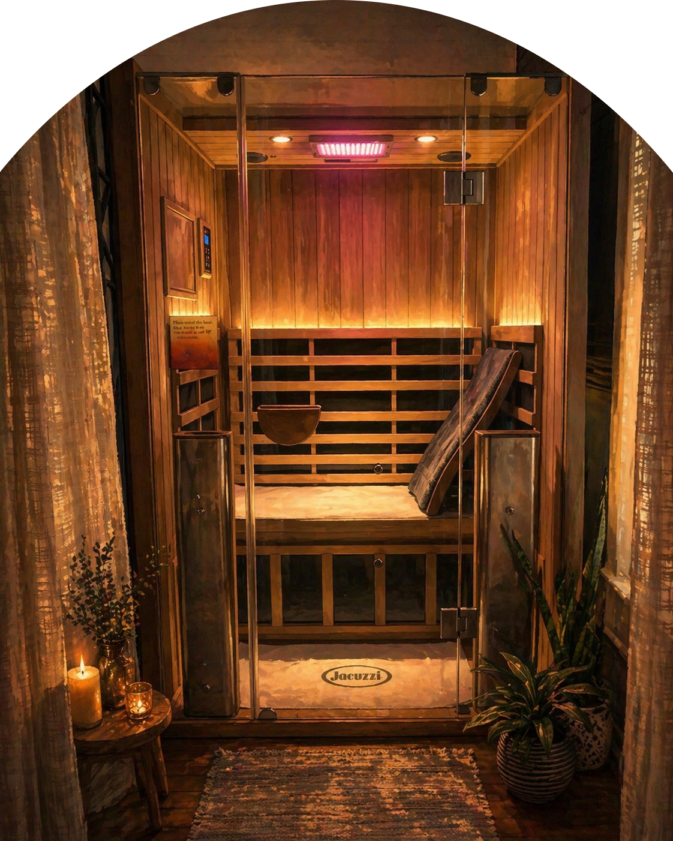
Heat thatworks deep.
Full-spectrum infrared penetrates one to two inches into tissue, easing pain at the source while cortisol drops, white blood cells climb, and the cardiovascular system gets a workout you don't have to earn.
Pain Relief
Infrared wavelengths penetrate one to two inches into tissue, releasing anti-inflammatory hormones at the source of joint and muscle tension.
1–2 in. tissue penetrationDetoxification
Cellular metabolism accelerates and pushes stored toxins out through the skin, denser sweat than any traditional sauna can produce.
7× detox vs. traditionalCardiovascular
Repeated sessions improve vascular function in patients with high blood pressure, diabetes, and cholesterol, a passive workout for the heart.
30 min · 3× weeklyImmune Support
Heat raises white blood cell counts and triggers heat-shock proteins shown to neutralize even drug-resistant bacteria and accelerate wound healing.
WBC ↑ · HSPs ↑Stress & Sleep
Cortisol drops while serotonin climbs. Most members report deeper, slower-wave sleep the same night as a session.
Cortisol ↓ · Serotonin ↑Anti-Aging
12 weeks of regular infrared sessions measurably increased collagen production and reduced fine lines in a Journal of Cosmetic & Laser Therapy study.
Collagen ↑ · 12-wk studyThe shape of a session
Arrive
Settle in. Change into the provided robe and slippers in your private suite.
Hydrate
Cool electrolyte water before you step in, heat works better when you're topped off.
Heat
Full-spectrum infrared. Phone away, breath slow. Sweat builds around minute fifteen.
Cool
Step out, towel down, and use the provided amenities to freshen up. Heart rate eases as core temperature unwinds.
Return
Lounge a beat. Re-hydrate. Walk back into the day a measurable degree calmer.
Learn more, when you're ready
Full-spectrum infrared raises core temperature without overheating the air. Inside fifteen minutes, your body responds as if you'd run a few miles: heart rate climbs, blood vessels dilate, and a flood of heat-shock proteins (HSPs) hits the bloodstream. HSPs scavenge free radicals, repair damaged proteins, and protect against the oxidative stress that drives muscle breakdown and aging. Cortisol drops; serotonin and norepinephrine rise. Cellular metabolism accelerates, breaking liquid molecules apart and pulling stored toxins through the skin, which is why infrared sweat measures roughly seven times more dense in heavy metals and chemical residue than a traditional sauna's. Thirty minutes in; an immune system, cardiovascular network, and nervous system that all just got a workout you didn't have to do.
Yes, meaningfully. Traditional saunas heat the air around you (often 180–200°F) and you sweat from external convection. Infrared cabins run cooler (140–155°F) but the wavelengths penetrate one to two inches into tissue, so the heat builds from the inside out. Most people report a deeper, more comfortable sweat at lower air temperature.
Whatever feels right, swimsuit, shorts, or nothing at all (your suite is private). We provide robes, towels, slippers, cool electrolyte water, and amenities to help you freshen up afterward. Just leave the phone in the locker.
Absolutely, and many members do. We recommend sauna first (sweat out tension), then float (let the magnesium and weightlessness reset the nervous system). Cold plunge between the two is the full reset stack.
If you're pregnant, have uncontrolled blood pressure, recent surgery, a fever, or are on medications that affect heat regulation, please check with your physician first. Our front-desk team will walk you through the intake form on your first visit.
Most members aim for 2–4 sessions per week to compound the cardiovascular and detox benefits. Even one weekly session moves the needle on sleep and stress markers, start where you can sustain.
Choose fifteen or thirty minutes.
The sauna and the float tank are both excellent ways to recenter and work on focus and calm.